
Artist In Residence
Caitlin Flood-Molyneux
Caitlin Flood-Molyneux is a contemporary Welsh Artist based in South Wales. Their artistic practice investigates the relationship between pop culture imagery and the way in which we attach emotion and memory to images using mixed media techniques to express subjective experiences of hardship. Flood-Molyneux has exhibited widely across the UK and internationally and has shown work at Christie’s and Sotheby’s Auction House in London. In 2024 they were shortlisted for the Forbes 30 Under 30 List Europe and spoke on a Forbes Panel at the Forbes Africa conference in Botswana. Flood-Molyneux’s work is both deeply personal and universal, as it charts key moments of their life; a private and enigmatic visual story with which Flood-Molyneux invites the viewer to forge their own connection.


Your work references DADA, early Pop Art, and contemporary pop culture. How do these influences come together in your work?
DADA, early Pop Art and contemporary pop culture come together in my work through collage and disruption. I begin with found imagery which is often old family photographs and images from my own past that feel emotionally charged. That process connects to DADA’s fragmentation and rejection of hierarchy. I’m interested in dismantling images and rebuilding them to create new meaning.
Pop Art influences my use of familiar visual language but I use it to tell my own story. I think of my works almost like storyboards. Each image, symbol or figure forming part of a larger narrative. By layering and disrupting recognisable imagery with expressive painterly gestures, I shift it from something collective into something personal.
The destruction and reworking of the image is really where the emotion sits for me exploring love, grief and resilience. Through that process something personal begins to open up into more universal experiences, reflecting how memory feels layered, fragmented and always shifting.
What draws you to a particular image, and how do you know when it holds enough emotionalweight to become part of a piece?
I’m drawn to an image when I feel an instant connection to it or when it sparks a memory. I often compare it to hearing a song that takes you straight back to a specific moment in your life. Imagery works the same way for me. If it stays with me, resurfaces or triggers something emotional, I know it holds enough depth to become part of the work.
When developing your own visual language. How has this language evolved over time, and are there symbols or motifs that feel especially persistent?
There are key symbols that recur throughout my work often tied to life experiences or things that feel inevitable. I’ve been through a lot in my life and while I don’t always feel comfortable speaking about those experiences directly, I will paint them. Painting gives me a voice.
My visual language has evolved as my life has evolved. Certain motifs remain persistent because some themes in life repeat themselves but as I grow and experience new things, new symbols begin to appear. I’m deeply drawn to symbolism in historical art and the way it quietly tells a story. I think I approach my own work in a similar way using recurring imagery to build layered narratives over time.
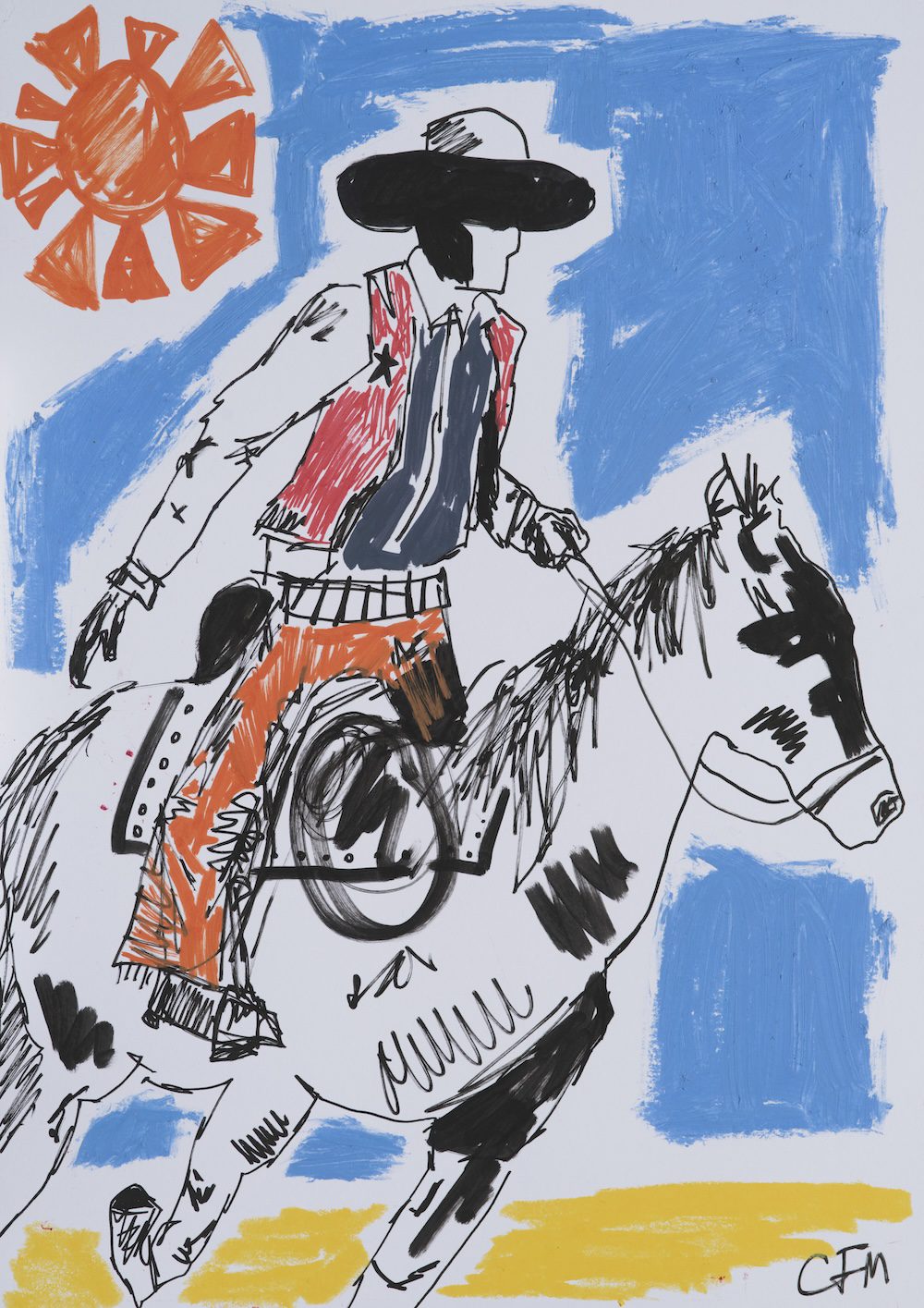
Do you see your practice as an act of preservation, reinterpretation, or release… Or something else entirely?
I see my practice primarily as a release. Painting has carried me through some of the hardest times in my life. It’s been the most consistent thing I’ve had. When I’m painting, everything else quiets down. I don’t overthink, I’m not distracted and time just disappears.
In that sense, it feels therapeutic. It allows me to process things without having to articulate them directly. So while there may be elements of preservation or reinterpretation within the work at its core, painting is a space of release and survival for me.
Collage is usually your starting point. Why is working with physical images important to your process?
Collage is important to my process because it helps me resolve composition in a very instinctive way. It feels playful almost like building a puzzle that already exists in my head. I’ll draw elements, cut things out, move them around and physically piece them together until the composition feels right.
Working with physical images allows me to experiment freely before committing to paint. It’s tactile, immediate and it’s how I’ve always worked. It gives me a foundation to build from while still leaving space for disruption and change once I start painting.
"It feels freeing. The process is the most important part of my practice, it’s where everything really happens. When I begin to disrupt or partially obscure an image with paint or different mediums, that’s the moment it becomes mine. The destruction is actually a release and that’s where the real emotion comes through."
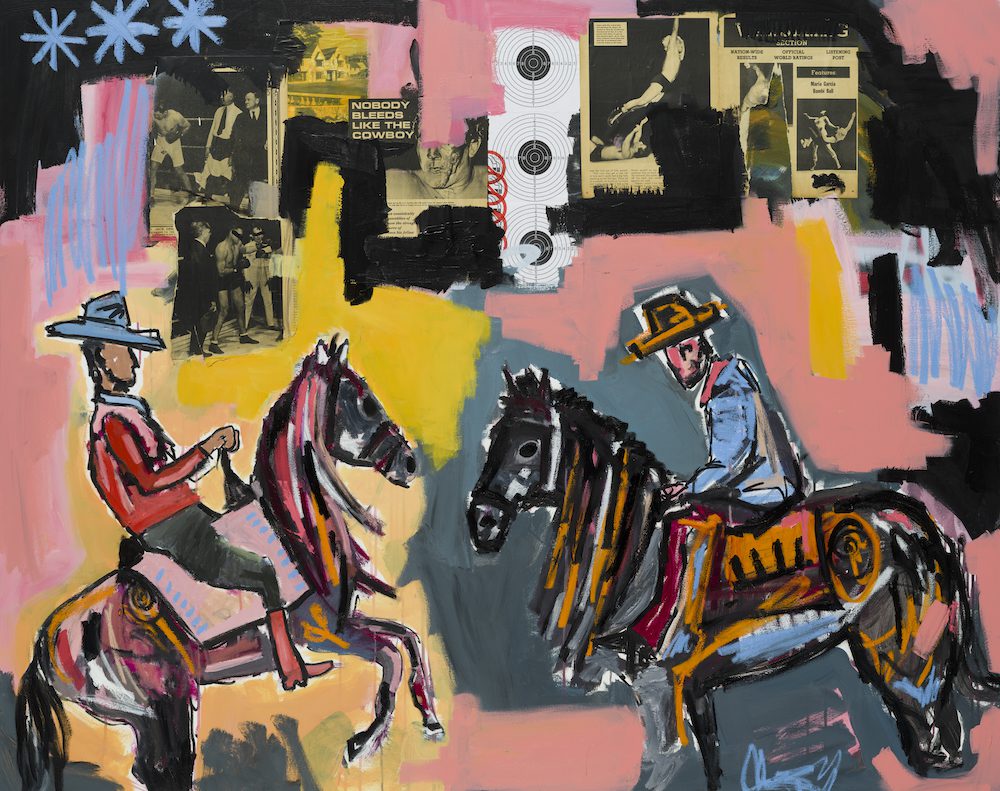
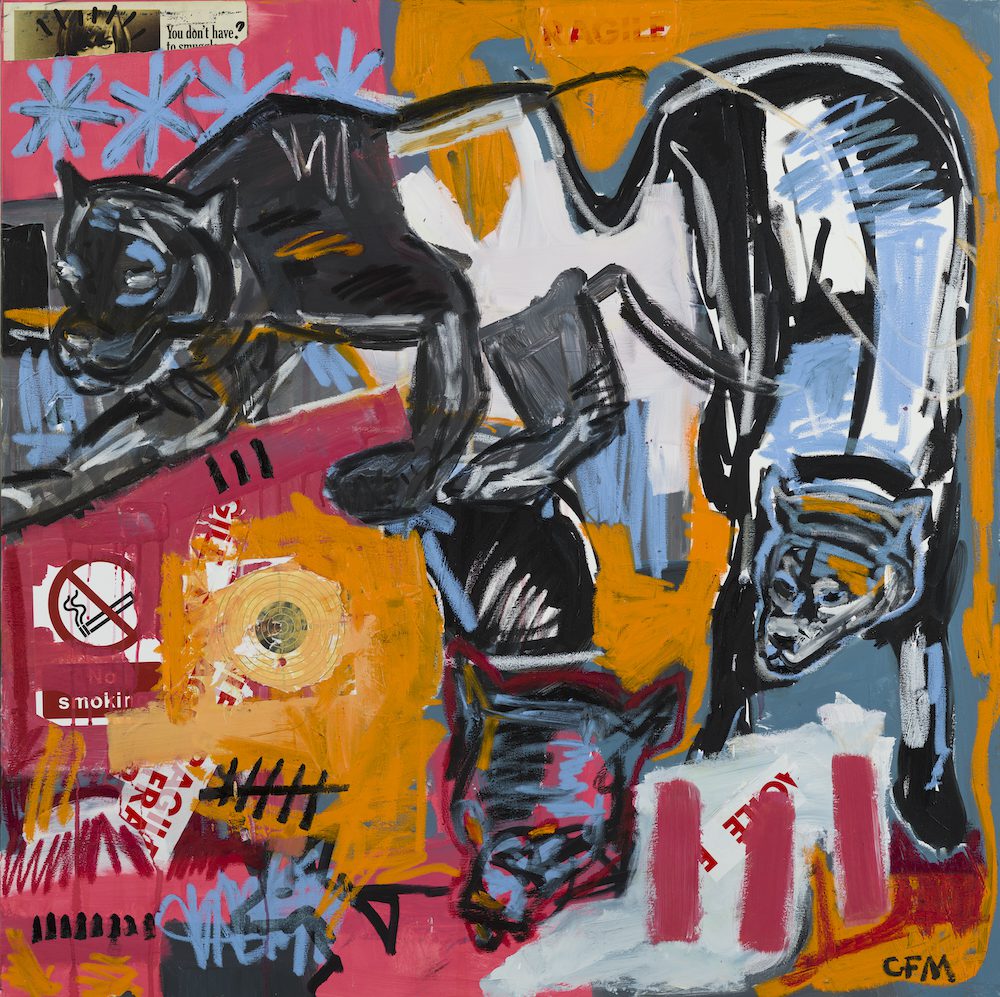

What are you hoping a residency environment will offer your practice at this stage in your practice?
At this stage I’m hoping a residency will free up my practice and shift my perspective. I want the space to experiment without pressure and to make work that feels more exploratory. Mostly, I’m looking to challenge myself and step outside of my comfort zone, both conceptually and materially.
How does working in a new place, geographically or socially, affect the memories and emotions that surface in your work?
Working in a new place naturally shifts my perspective. When you step away from your usual environment and reflect on your life from a distance, memories can feel distorted or softened, sometimes clearer, sometimes more abstract. That change in context affects what surfaces in the work.
I try to stay open in those situations and let the work lead. I don’t want to put pressure on the outcome. I’m more interested in seeing what rises naturally when my surroundings and routines are disrupted.
Looking ahead, are there directions or risks you feel drawn to taking in your future work?
Looking ahead, I feel drawn to pushing my materials further and making more experimental work. I want to challenge the way I usually work by finding new ways to approach the process. I’m interested in taking risks where the outcome isn’t fully controlled and freeing things up more. I’d like to play with composition in different ways and allow the work to evolve more instinctively.
For me, it’s important that the work keeps evolving. I think that’s essential for any artist.
Get In Touch
For more information on residing with us, availability, upcoming events and collaborations, please drop us a line!
Contact Us
hello@cascinadellarte.com
Cascina Dell’Arte
Via Camillo Benso Conte di Cavour 54,
13044, San Genuario, VC, Italy.